Fiber-based internet, community-wide Wi-Fi, smart building technology, video and voice — designed, built, and operated for your property, with service levels written into the agreement.
Bill Wright · 35 years in multifamily connectivity · Texas & DFW
Powered by Smartaira · Service in 28 states

Connectivity is the amenity every resident uses every hour of every day, and the line item an asset manager defends for the life of the agreement. A property network has to answer to both.
Not a router in every unit and a separate guest network at the pool. One managed network across the whole community, with each home private and secure on it.
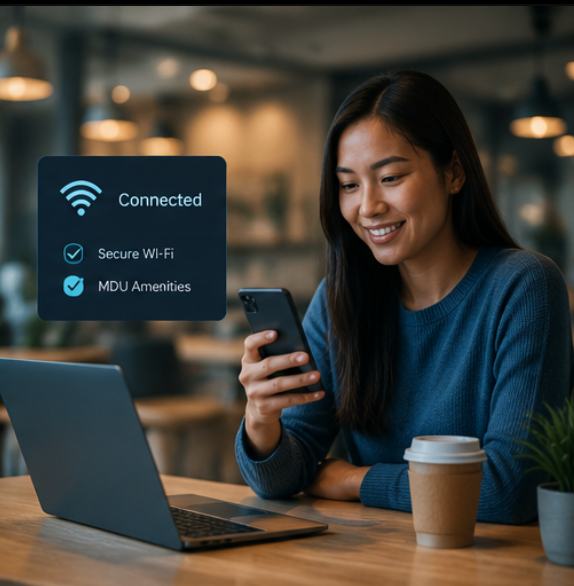
Multi-gigabit infrastructure built for the property, not adapted to it.
The same speed up as down. Video calls and uploads, not just downloads.
Managed continuously from a US-based network operations center.
Every home on its own protected connection, everywhere on the property.
Internet is the foundation. Video, voice, and building technology ride the same infrastructure — which is what makes the per-door economics work.
Community-wide coverage on 100% fiber infrastructure, with symmetrical speeds where the build supports it.

The network is designed from the start to carry property technology on its own segment, separate from resident traffic.
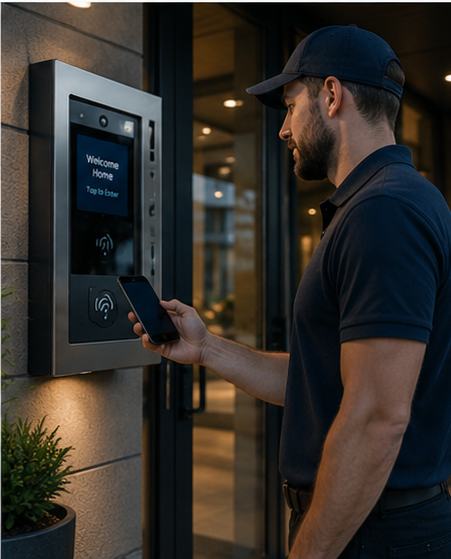
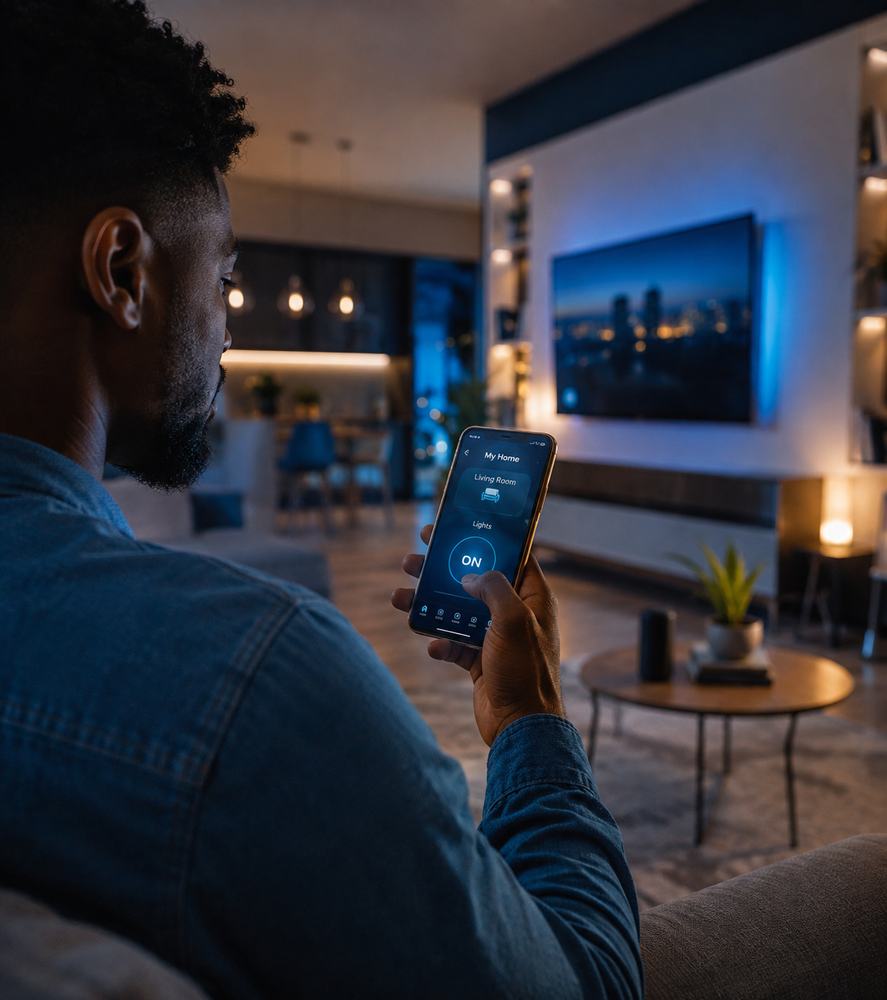
Residents run their homes from one app on a network engineered to carry it — lighting, climate, entry, and entertainment together.
A genuine bundle available bulk or retail, so residents aren't assembling one themselves.

Full-featured phone service for residents who want a traditional landline, delivered over the same network.

A lease-up tower, a garden-style repositioning, a student property turning over every August, and a senior community all need different things from a network. The design follows the property.
Garden-style through high-rise. Bulk or retail, community-wide coverage, and an amenity your leasing team can market on day one.
Peak density, total turnover every August, and residents who judge a property on bandwidth alone. By-the-bed onboarding and a network built for the load.
Simple for the resident, connected for the family, and a network that also carries staff communications, safety systems, and building technology.
A board buying on behalf of owners needs transparent economics, a clear service commitment, and a provider that shows up to the annual meeting.
Connectivity costs least when it's designed in rather than retrofitted. Pathways, conduit, riser space, and MDF/IDF placement get specified before the walls close, and the property opens with the network already live for the first resident tour.
Most properties already have conduit, riser space, and in-unit cabling worth using. A site survey establishes what can be reused and what has to be built, which is what actually determines the capital required and the speeds the property can carry.
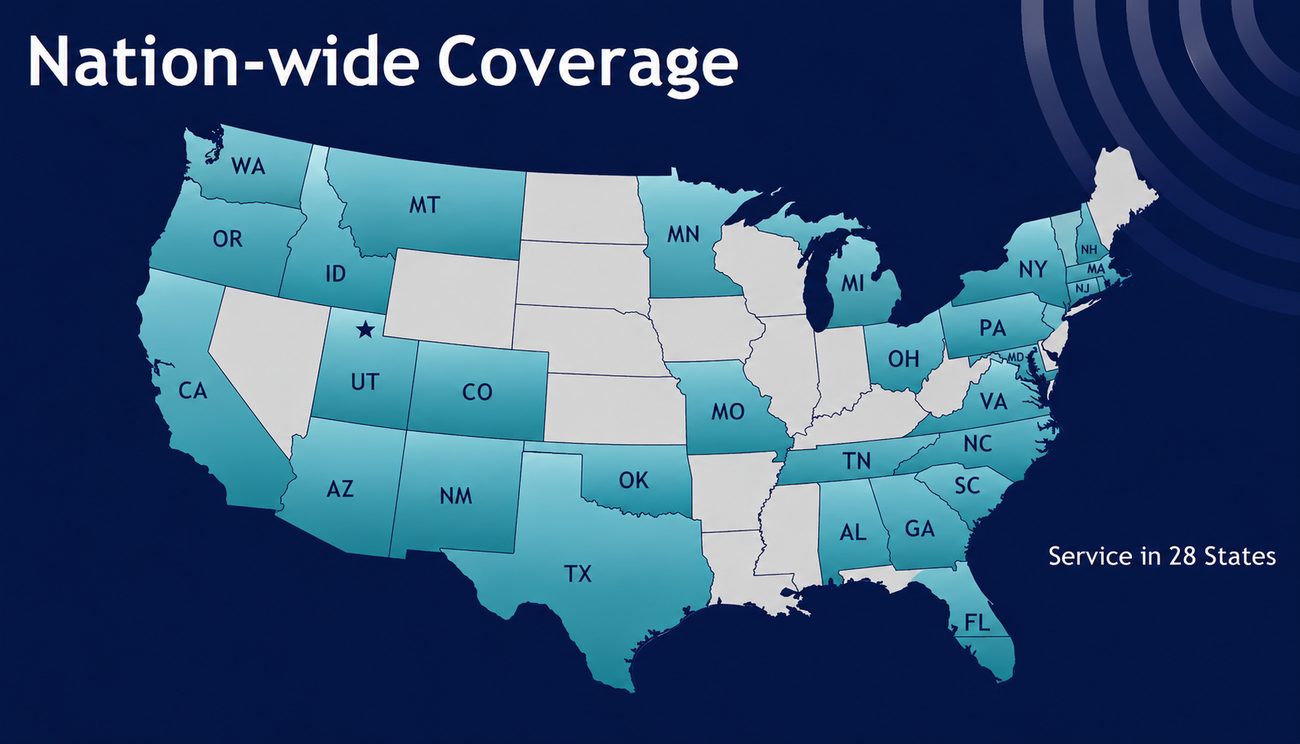
Service across 28 states with distributed portfolios, delivered by a national independent provider with more than fifty years in multifamily technology.
That footprint means a portfolio spanning multiple markets can run one provider, one product set, and one standard — instead of a different vendor and a different resident experience at every asset.
Backed by SDC Capital Partners, an infrastructure investment firm — which is what makes a long-term agreement worth signing.
Several providers in this category run genuinely good support organizations, and it would be dishonest to pretend otherwise. The difference is narrower and more useful: whether the commitment is a service standard the provider maintains, or a term of the agreement you can hold them to. Ask any competing bidder to show you where it appears in the contract.

Smartaira's published service commitments
Residents choose a plan under retail, but only because the property already decided the asset would run retail. This is an ownership decision about who controls the most-used amenity on the property — and it gets made once, for the life of the agreement.
The property purchases service for every unit and delivers it as an amenity — included in rent or billed as a technology fee. Residents are served and supported directly, with no contract of their own. The lowest per-door cost, the strongest ancillary income, and something the leasing team can market from day one.
Each resident chooses and purchases their own plan. Sales, billing, and support run directly to the resident, and the property carries no service obligation. Less income than bulk, considerably less to approve, and a reasonable way to test a first property before committing a portfolio.
Under retail there is no reporting relationship between the provider and the property. Outages, slow installs, billing disputes and support failures happen inside a transaction the property isn't part of — so nobody sends the owner a report. The resident still associates the experience with where they live. The first time an owner learns connectivity is a problem is often a renewal conversation or a review, long after it could have been fixed.
Every resident is buying internet regardless. Under retail that spend leaves the property entirely and lands with a carrier. Under bulk the property buys it wholesale, the resident pays less than retail, and the difference becomes recurring income that capitalizes into the asset. Retail isn't neutral — it's a decision to route money that's already flowing through your building to somebody else.
Connectivity is the top-ranked technology amenity renters will pay a premium for. Under retail, a prospect on a tour hears a list of providers to call. Under bulk, they hear what this property has decided to give them and why. One is a logistics problem handed to the resident; the other is a reason to sign.
None of which makes retail wrong. For a stabilized asset, or an owner who wants to see the service work before committing a portfolio, it's a sensible place to start. It should just be chosen deliberately, with these costs counted — not defaulted into because it's the option that requires no decision.
Per-unit economics vary with the delivery model, the existing infrastructure, and how close the property sits to the network. A property review returns real numbers for your asset rather than a generic range.
Bulk isn't the aggressive option. It's the one where the resident pays less, the property earns more, and the network gets built properly — and there is now hard data on all three.
Monthly rent premium renters say they'll pay for high-speed internet access — the highest of any technology amenity measured, with 89% of renters expressing interest.
NMHC / Grace Hill Renter Preferences Survey (2022 edition), 221,000 renters across 4,564 communities; a 2024 edition has since been published
How far below comparable retail pricing bulk broadband lands — an estimated $5.6 billion in annual savings to MDU residents nationwide.
Cartesian, Understanding Bulk Billing Arrangements, drawn from 1,000+ active bulk contracts and the FCC's Broadband Data Collection; filed with the FCC May 2026, GN Docket No. 26-78
Bulk arrangements have remained free of federal regulation through every Commission review. In January 2025 the FCC ended consideration of a proposed bulk-billing ban, citing the risk of raising apartment internet costs.
FCC; the FY2025 Agency Financial Report states bulk-billing programs allow families living in apartments to access lower-cost internet services
This is the part owners misread. Bulk isn't a fee added to rent — it's the mechanism that gets a resident gigabit service for roughly half what they'd pay a carrier retail, with no install appointment, no equipment rental, no promotional expiry, and no contract. The resident's total housing cost goes down while the amenity goes up. That's a renewal argument, not a billing argument.
A one-time door fee is income. Recurring net income is value. An owner collecting incremental NOI per door per month is not just earning it — they're increasing what the property appraises and sells for, because the asset is valued on the income it produces. Divide annual net income by your cap rate and you have the valuation lift. At a 5% cap rate, one dollar of monthly net income per door adds roughly $240 per door in asset value. Run your own rate and your own number; the arithmetic doesn't change.
A provider signing up residents one at a time can't justify what it costs to fiber a whole property properly, because it never knows how many units it will end up serving. A provider committed to every unit can — which is why bulk properties get the multi-gigabit build, the common-area coverage, the staff and IoT segments, and the equipment refresh, while retail properties get whatever the existing plant already supports. The economics of the agreement determine the quality of the network.
The honest caveat: bulk is stable federally but not untouched. The FTC has opened an inquiry into bundled and hidden rental fees that could reach bulk arrangements, and California's AB1414 changed how owners may offer bulk internet effective January 2026. How the fee is disclosed to residents matters — and it's a conversation worth having before you sign, not after.
A named launch and account team from survey through activation and beyond.
Your leasing and maintenance teams trained on the product before residents ever ask.
Collateral and resident events so the amenity is understood and used from day one.
Residents call support directly, so connectivity doesn't land on your leasing office.
This network carries portfolios that get evaluated by procurement committees and investment committees — not just by a property manager comparing two brochures. That is a different standard of scrutiny, and it has already been met.
Institutional owners with formal vendor diligence, procurement review, and multi-market standards.
Third-party operators running assets on behalf of multiple owners across multiple states.
Portfolios where bandwidth is the amenity residents judge first and turnover happens in a single week.
Owners running dozens of assets in a market who need one standard rather than one vendor per property.
Communities where the resident expectation is set by what they had in a single-family home, or better.
New construction brought in at design, with pathways and riser space specified before the walls close.
Specific operators, properties, and references are available in conversation. I don't publish a client list — the owners on this network didn't sign up to be marketing material, and the ones evaluating it now deserve the same discretion.
Thirty-five years in multifamily connectivity. Twenty-three of them at Comcast, where I helped build the enterprise MDU and bulk internet business that became Xfinity Communities — one of three managers who stood it up before the program had a name.
That means I've sat on the other side of this table. I know how a national carrier prices a property, what a door fee is designed to accomplish, where a standard agreement protects the provider, and which questions an owner should be asking that nobody volunteers. I bring that to the properties I represent now.
MDU Amenities is my practice, and I'm your single point of contact — through the survey, the proposal, the launch, and every renewal conversation after, instead of an account rep who rotates off in eighteen months. Behind that sits a national provider with engineering, construction, network operations, and a 24/7 support organization. You get the access of working with one person and the depth of a company operating in 28 states.

"No obligation, and no pitch until you've seen numbers."
Submitting the form doesn't start a sales sequence. It starts a conversation about one property, and you can stop it at any point without having committed to anything.
Twenty minutes. What you own, what's in place now, what's frustrating you, and when your current agreement expires. No deck.
I confirm what's deliverable at the address and how close the property sits to existing infrastructure — which is the single biggest driver of what it costs.
An engineer walks the property: riser space, conduit, existing cabling, MDF and IDF locations. This is what turns an estimate into a number.
Bulk and retail modelled side by side for your asset, with per-door economics, the service levels that would be committed, and the term. You see the math, not a range.
Terms negotiated, then a dedicated launch team from construction through activation, staff training, and resident marketing.
Steps one and two cost nothing and commit you to nothing. Most owners stop there the first time and come back when a renewal date gets close. That's fine — the timing is yours.
The real choice isn't which logo goes on the welcome packet. National carriers are built to acquire residents as subscribers. A property-first provider is built to serve the asset. Here is where that shows up.
| Our solutionMDU Amenities | Spectrum | AT&T | Comcast | Regional fibere.g. Ezee Fiber | |
|---|---|---|---|---|---|
| Built for | Multifamily is the entire business — the property is the customer. | Multifamily rides the residential cable network. | One line of business inside a national carrier. | A property division of a retail broadband company. | Independent fiber builder; multifamily is one segment alongside residential and business. |
| Coverage | 28 states, with every property surveyed and designed individually. | Where their existing plant already reaches. | Strong on the AT&T Fiber footprint; availability footnoted by state. | Very large — roughly 189,000 properties and 14.7 million units. | Deep in a home metro, thin outside it — strong in Houston, limited elsewhere. |
| Network | 100% fiber, multi-gigabit, symmetrical where the build supports it. | Hybrid fiber-coax; high-split and DOCSIS 4.0 upgrades underway. | Genuine fiber where deployed — a real strength on their footprint. | Hybrid fiber-coax plus fiber; DOCSIS 4.0 symmetrical multi-gig in a growing list of markets. | 100% fiber, symmetrical, often the newest plant in the market. |
| Upgrade timing | Designed to the property at build. | On their capital schedule. | On their build schedule. | On their capital schedule. | New build, so little legacy to upgrade. |
| Day-one internet | Live at move-in through PMS integration. | Their gateway, their account. | Their equipment, their markets, their timeline. | Their gateway, their account. | Varies by provider and property. |
| Managed Wi-Fi | Property-wide, with a private VLAN per home, engineered for MDU. | Residential product delivered in bulk. | Consumer product extended across the property. | A property offering beside a much larger retail business. | Offered, with capability varying by builder. |
| Support | 24/7 US-based, with a named account team that stays with the portfolio. | Dedicated US-based call centers built specifically for bulk communities — a genuine strength. | National support organization. | National support organization with a property concierge portal. | Local support, often the fastest response in-market. |
| Committed in the agreement | Response commitments and reliability are contractual terms of the property agreement, with remedies. | Support quality is a service standard, not published as a contractual commitment. | Public materials describe support through design and deployment rather than over the term. | Public materials describe proactive monitoring; committed service levels are not published. | Strong published uptime figures; contractual remedies vary deal by deal. |
| Your economics | Bulk wholesale — the property keeps the margin as recurring NOI. | They bill residents; the property receives a fee. | They keep the customer; the property receives a fee. | Where a door fee is used, it trades long-term access for an upfront payment and the recurring upside stays with the provider. | Wholesale rates offered; structures vary by provider. |
| Flexibility | Term negotiated against the capital invested. | Once the plant is in the walls, leaving means a rebuild. | Offered on the carrier's standard terms. | Once the plant is in the walls, leaving means a rebuild. | Often the most flexible — some advertise no term contracts. |
| Across a portfolio | One provider, one product set, one standard across 28 states. | Broad footprint, but only where their plant reaches. | Broad, with availability varying by state. | The largest footprint in the category. | One metro. A multi-market portfolio needs a different vendor at every asset. |
| The resident | Stays the property's resident. | Becomes a Spectrum subscriber. | Becomes an AT&T customer. | Becomes an Xfinity customer. | Usually becomes the provider's retail customer. |
Comparison of publicly stated positions and standard industry practice as of August 2026, drawn from each provider's own property-owner materials and public statements — including Spectrum Community Solutions' dedicated bulk-community call centers and regional fiber builders' published uptime and term policies — the FCC's Report and Order in GN Docket No. 17-142 (FCC 22-12, adopted February 2022), and public DOCSIS 4.0 deployment announcements. Exclusive and graduated revenue sharing was prohibited by that order; exclusive marketing arrangements must be disclosed to residents. Terms vary by market, property, and negotiated agreement, and competitor network capability changes — confirm specifics with any provider before deciding.
Where the others genuinely win: the carriers on footprint, mobile bundling, owned content, and balance sheet; regional fiber builders on newest plant, local response, and often the most flexible terms in their home metro. If a property's decision rests on national brand recognition or a mobile bundle, that's a fair reason to choose one. The argument here is narrower and more useful — that on the terms an owner actually lives with for a decade, the property-first model is structured differently, and the difference is worth putting in writing.
If something here doesn't match what you were told, ask me. These are the questions that come up in every first conversation.
It depends on the structure — and the case for bulk is laid out with sources here. Under retail, the property pays nothing for service — residents buy their own plans and the property carries no service obligation, though it also gives up visibility into how the amenity is performing and the revenue residents are spending anyway. Under bulk, the property buys service for every unit at a per-door rate well below retail and typically recovers it through rent or a technology fee, which is where the ancillary income comes from. Construction cost varies with what infrastructure already exists and how close the property sits to the network. A site survey produces the real number for your asset, not a range.
Almost nothing after launch. Residents contact support directly, twenty-four hours a day, so connectivity issues don't route through your leasing office. Your team gets trained on the product before residents start asking, and you have a named account team rather than a general support queue. The network is monitored proactively, so most faults are identified before anyone reports them.
Support is staffed entirely in the United States, around the clock, reachable by phone, text, online, or email. The network operations center monitors continuously. Most importantly, the response commitments are written into the property agreement as service levels rather than described in a brochure — which means you have recourse, not just a promise. Ask to see that language before you sign anything.
Multi-year, and the length is driven by the capital being invested in the property. Where the provider funds the fiber, electronics, and access points, the term has to be long enough to recover that investment. Where a property sits close to existing infrastructure and requires less construction, there's more flexibility. Term, renewal, and assignment language are all negotiated deal by deal — bring your specific concerns and we'll address them directly rather than after signing.
This is the question asset managers care about most and the one least often answered up front. Agreements transfer with the property, so the buyer inherits the service and the terms. Because that's a real diligence item in any sale, the assignment provision is worth reading closely before you sign rather than discovering during a transaction. Ask me for the specific language on any deal we discuss.
No. Residents are never locked into a term agreement. Under bulk the service arrives with the unit; under retail they choose a plan and can change or cancel it. That matters for turnover — an amenity that creates friction at move-out isn't an amenity.
Multi-gigabit is available on properties built for it, with symmetrical speeds — the same upload as download — where the infrastructure supports it. But the honest answer is that the riser and in-building distribution determine the ceiling, not the marketing. That's why every property is surveyed and designed individually instead of quoted from a template.
Me, directly, for the life of the relationship. I'm an authorized independent channel partner for Smartaira, compensated by Smartaira for business I originate. I'm not an employee or agent of theirs, and terms are set in the agreement between you and the provider. You get a single point of contact who knows your portfolio rather than a rotating account rep, and thirty-five years of multifamily connectivity experience behind the recommendation — including twenty-three years at Comcast building enterprise MDU and bulk internet programs.
Tell me the property or the portfolio and I'll come back with what's serviceable, which delivery model fits, and the per-door economics. No obligation, and no pitch until you've seen numbers — here's exactly what happens next.
 Direct
35 years in multifamily connectivity, including 23 years at Comcast building enterprise MDU and bulk internet programs across Texas.